Ashiesh Shah: Design, Craft, & Philosophy
In the realm of contemporary Indian design, Ashiesh Shah emerges as a quiet revolutionary, drawing deeply from the Japanese ethos of Wabi-Sabi to celebrate the beauty of imperfection, transience, and the handmade.
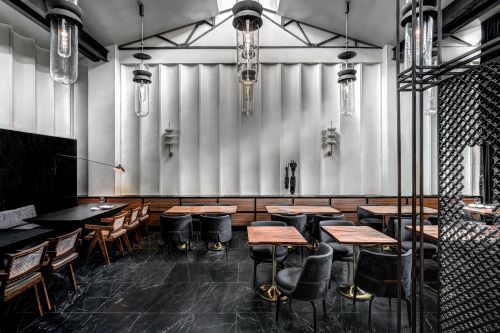
As founder and creative director of Ashiesh Shah Architecture + Design, Ashiesh orchestrates spaces where restraint meets profound resonance. His portfolio reveals a masterful command of materiality, proportion, and light. An avid collector and curator, he extends his vision through Atelier Ashiesh Shah, a creative ecosystem dedicated to bespoke objects and evolving opulent craftsmanship.
In this exclusive tête-à-tête, Ashiesh Shah unveils the philosophies and subtle convictions that inform his practice, inviting us to reconsider how spaces can quietly transform the way we live, feel, and endure.
The Japanese philosophy of Wabi-Sabi is a cornerstone of your practice. How did this aesthetic first capture your imagination, and how has it shaped your vision for space, materials, and luxury across your projects?
Wabi-Sabi resonated with me long before I encountered it as a formal philosophy. I was already inclined towards the idea that imperfection carries meaning. When I later discovered Wabi-Sabi, it felt less like an import and more like a language that articulated what I intuitively understood: that beauty lies in the incomplete, the transient, the handmade. In my work, Wabi-Sabi shapes how I think about space and material. I am drawn to surfaces that age, to materials that record time rather than resist it. Luxury, in that sense, is not about polish or permanence, but about emotional depth. It is about allowing stone to be porous, wood to retain its grain, and plaster to show the hand that shaped it.
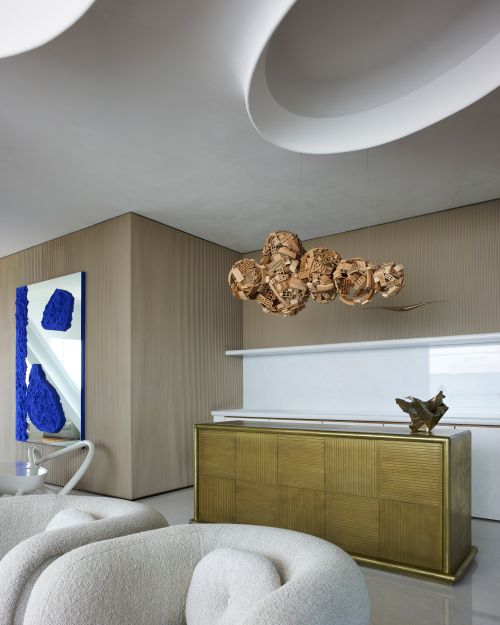
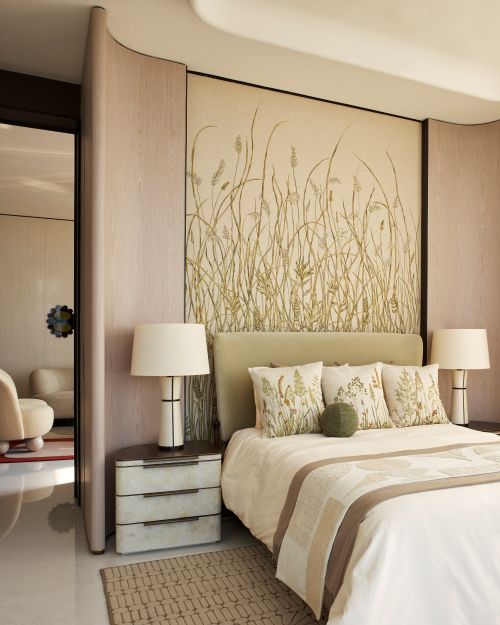
Your diverse portfolio includes high-profile residences for Bollywood celebrities, concept stores, and restaurants. How do you tailor your minimalist, soulful approach to reflect the personalities of such prominent clients?
I don’t approach projects through the lens of celebrity or profile. I begin by listening to the client, to the site, and to the story the space wants to tell. Personalities are layered, and my role is not to impose a signature but to create a framework where those layers can exist with clarity. Restraint becomes especially important in such contexts, as I prefer to step back and let materials, proportion, and light do the work. Over time, clients begin to see that minimalism is not about reduction, but about focus. When a space is calm and considered, it allows personality to emerge naturally rather than being performed.
Launching Atelier Ashiesh Shah in 2017 marked a seamless extension into product design, with bespoke furniture, lighting, rugs, and tiles rooted in geometry and materiality. What drove this evolution, and how does the atelier foster experimentation?
The atelier was conceived as an ecosystem rather than a studio. Architecture, interiors, and objects have always felt like different expressions of the same intent to me. What drives the atelier is curiosity and responsibility. It is a space where experimentation is encouraged, where indigenous crafts are not treated as fixed traditions but as living systems capable of evolution. Geometry and materiality become tools for dialogue between the contemporary and the handmade. The atelier allows us to test ideas slowly, to fail thoughtfully, and to build a design language that is rooted yet relevant.
As a passionate art collector and curator whose tastes span centuries and continents, how does your engagement with art directly inspire and enrich the narratives, textures, and compositions in your architectural and interior works?
Collecting keeps me in constant conversation with time. When you live with objects across centuries and cultures, you begin to understand proportion, restraint, and silence in a deeper way. This engagement informs how I compose spaces. Art sharpens my sensitivity to texture and rhythm, to how objects occupy space without overpowering it. Curating, in particular, has taught me the value of editing and knowing when to stop. In architecture and interiors, that translates into narratives that unfold slowly, where meaning is revealed rather than declared.
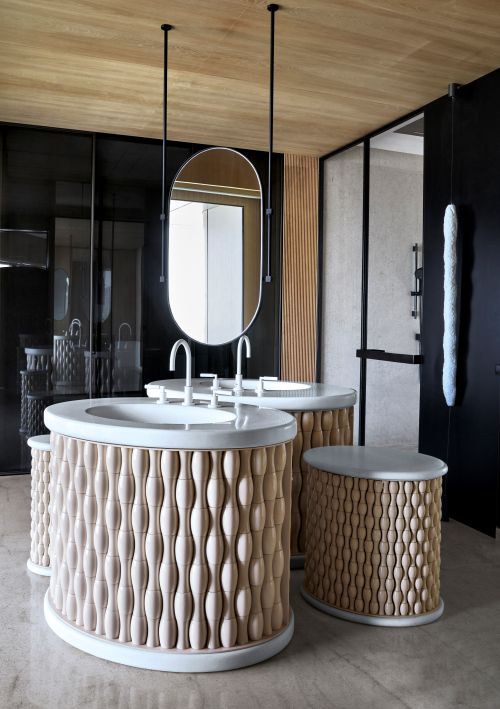
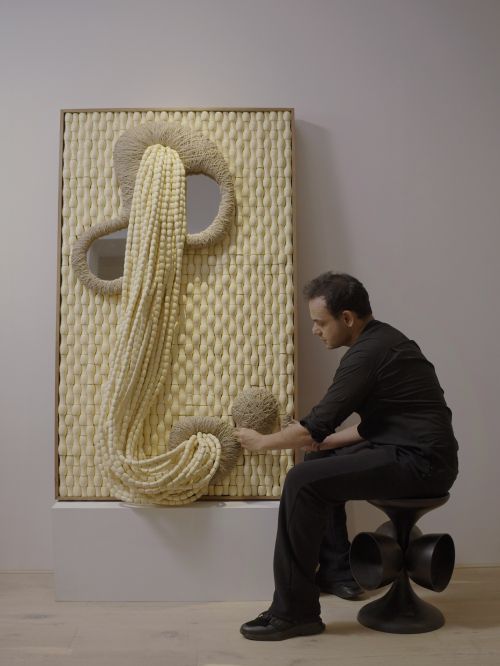
Your 2023 exhibition ‘Sustain: The Craft Idiom’, curated for the G20 Culture Working Group, powerfully showcased living heritage and sustainable craftsmanship. Could you share the conceptual vision behind it?
The exhibition was conceived as a statement about responsibility. I wanted to move the conversation around craft away from nostalgia and toward relevance. ‘Sustain’ was about positioning Indian craft as living intelligence, adaptable, contemporary, and essential. The vision was to foreground process, labour, and material honesty. Craft was not presented as ornament, but as essence. Sustainability, for me, is inseparable from craft because traditional techniques already understand ecology, longevity, and restraint. The exhibition aimed to show that when craft leads design, it sustains culture, livelihoods, and environments simultaneously.
Consistently recognised on Architectural Digest’s AD50/AD100 lists since 2013 and honoured with multiple Elle Décor International Design Awards, what elements of your design philosophy do you feel distinguish your work?
I don’t think about distinction in terms of recognition. What matters to me is the integrity of material, of process, of intent. If there is a through-line in my work, it is a restraint guided by material intelligence. I am interested in work that does not announce itself loudly, but stays with you over time. Spaces and objects that age well, that gather memory, that remain relevant beyond trends. If my work feels distinct, I believe it is because it prioritises clarity over spectacle, and ethics over image.
In 2020, you co-founded The India Design Fund to bolster artisans and indigenous craftsmanship amid global challenges. What inspired this initiative, and what lasting transformations do you envision for India’s design ecosystem through such advocacy?
The India Design Fund emerged from a moment of urgency. During the pandemic, the fragility of our craft ecosystems became painfully visible. Artisans were vulnerable not because of a lack of skill, but because of systemic neglect. The initiative was inspired by the belief that craft must be supported structurally, not symbolically. Long-term, I hope it contributes to a more equitable design ecosystem, one where artisans are collaborators, not footnotes; where fair compensation is non-negotiable; and where indigenous knowledge is recognised as contemporary expertise rather than heritage alone.
Through your roles as a contributing editor for Vogue and Architectural Digest, and as host of the TV series Design HQ, you’ve become a prominent voice in contemporary design discourse. How has this platform influenced perceptions of modern Indian luxury and craftsmanship?
These platforms have allowed for a wider, more nuanced conversation. My intention has always been to shift perception, to show that Indian luxury does not need to imitate global minimalism or rely on excess. By highlighting process, craft, and material intelligence, the narrative around Indian design begins to change. Luxury becomes quieter, more ethical, more rooted. If these platforms have helped foreground that perspective, then they have served their purpose.
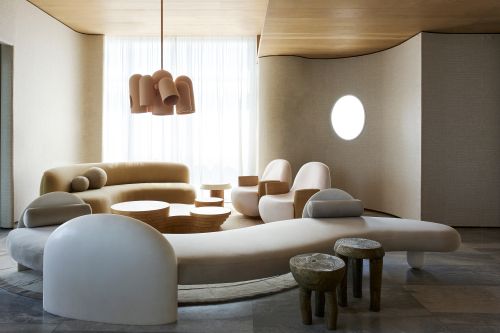
Your projects and atelier pieces have earned acclaim in international publications like The New York Times, Wallpaper, and The World of Interiors. How do you harmonise global design influences with a profoundly Indian sensibility?
I don’t see global and local as opposing forces, as harmonising the two comes down to specificity. When work is deeply rooted in place, material, and process, it resonates universally. I’m less interested in borrowing global influences and more interested in presenting Indian craft with clarity and confidence. The world responds to honesty.
With your multifaceted practice spanning architecture, interiors, product design, curation, and cultural advocacy, what are your ambitions for the future?
I want to continue building work that is timeless rather than timely. My ambition is not expansion for its own sake, but depth, deeper engagement with craft, material research, and cultural narratives. If, decades from now, my work helps position Indian craft as a living future rather than a preserved past, and shows that emotional quiet can be its own form of luxury, I will feel that the practice has contributed meaningfully.