Stapati: Design Visionaries
Founded in 1989 by architect Tony Joseph, Stapati has blossomed from its Calicut roots into one of India's premier design firms, celebrated for its innovative and contextually responsive architecture.
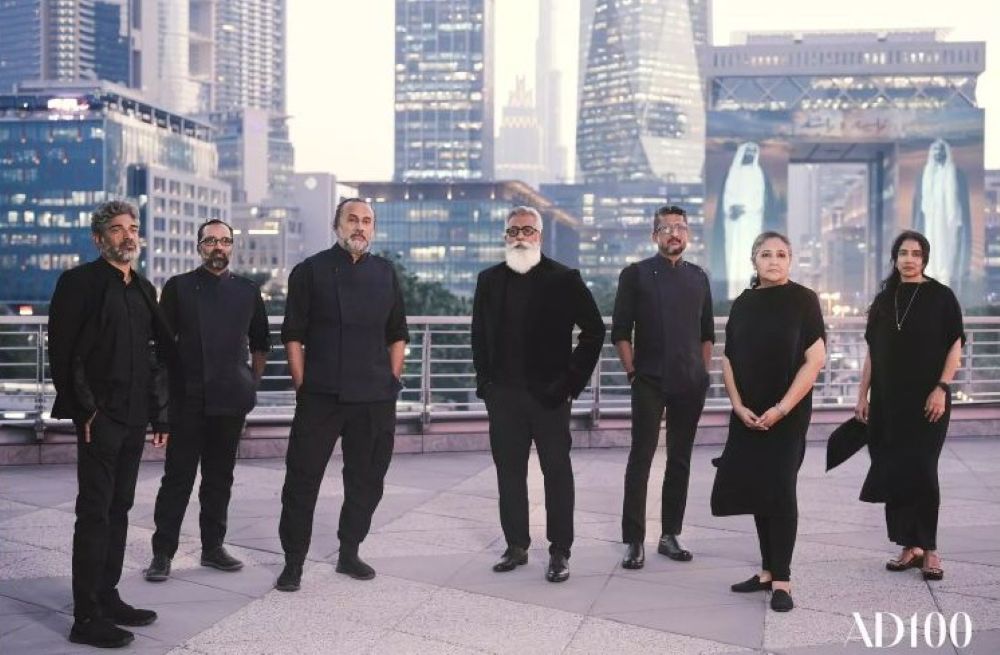
Stapati's growth and innovation are steered by Principal Architect Tony Joseph and CEO/Design Director George Seemon, within a collective leadership that values collaboration and expertise. The firm's expansive reach, with offices in Calicut, Cochin, Bangalore, and an international presence in Dubai, reflects its deep understanding of client needs, cultural context, and environmental sensitivity.
In Conversation with Tony Joseph
What specific aspects of regional architecture do you believe are essential to modern
design?
When designing modern structures, it is crucial to consider the context in which they will exist. This
context involves the geographic, cultural, environmental, and temporal elements of a location, which
provide rich inspiration and reflect the uniqueness of the area.
In your opinion, what makes Stapati’s approach to architecture unique compared to other
firms?
Our approach stands out for its dedication to providing culturally relevant, economically sustainable
solutions tailored to each project. By emphasizing the importance of client interests, innovative
design, and environmental sensitivity, we create architectural solutions that are practical, contextual,
and environmentally responsible. The firm's deeply involved approach ensures that each project reflects
the cultural identity of the location while incorporating energy-saving measures and sustainable design
principles.
How do you integrate integrity, sustainability, and innovation into your projects?
At Stapati, our core principle of sincerity to oneself extends to our approach with clients, the
environment, and the final product, ensuring that integrity, sustainability, and innovation are
fundamental to everything we do. We stay informed about the latest advancements, bringing fresh
perspectives to our designs while remaining true to the context and environment of each project.
What have been some significant challenges you’ve faced in the industry over the past 35
years?
Staying relevant in an evolving industry has been a key challenge. We prioritize staying updated on
trends, technologies, and practices. Retaining talent has also been a challenge, which we address
through a culture of growth and inclusivity, offering a clear progression path for architects within the
firm.
Can you discuss a project that best represents Stapati’s design philosophy?
The pavilion created for the Kochi-Muziris Biennale 2016 showcased sustainability and contextual
sensitivity by using recycled materials and environmentally friendly construction practices. Every
decision, from utilizing debris for walls to reusing materials like flex sheets and saris, was guided by
principles of sustainability and environmental consciousness.
What role do local culture and tradition play in your architectural designs?
Local culture and tradition can significantly influence our designs, particularly in projects tied to
cultural identity, like resorts or museums. These projects often incorporate elements that reflect the
essence of the region. For commercial or residential projects, the influence may be more subtle but
still carefully considered based on the project's typology.
How do you approach sustainability in your designs, particularly in the context of materials
used?
Sustainability is core to our designs, focusing on energy efficiency, environmental sensitivity, and
local materials. We prioritize using recycled and upcycled materials, like reclaimed wood from older
homes. Our furniture brand 'Smaram' embodies this ethos by repurposing ancient wood into furniture
pieces that retain their age and story, reflecting our commitment to cultural significance and
storytelling.
Project Showcase
ALTITUDE | Wayanad, Kerala
Perched 4,000 feet above sea level, Altitude is a 2,900 sq. ft. steel-framed farmhouse designed as a serene escape within 650 acres of plantations. Featuring a striking winged canopy roof that blurs indoor-outdoor boundaries, the residence offers panoramic valley views. It prioritizes transparency with open-plan living spaces, an infinity pool, and floor-to-ceiling glazing. Clad in zinc-aluminium, the canopy shelters interiors while enhancing vistas, harmonizing modern luxury with raw wilderness using Kadappa stone floors and basalt accents.
BHIMA JEWELLERY | Alappuzha, Kerala
The Bhima Jewellery showroom is a journey into architectural finesse where traditional charm blends with contemporary design. The space features intricate latticework crafted from wood, creating a dynamic rhythm of suspended decorative elements. Vibrant walls inspired by textile patterns complement the jewelry displays, while transparent, minimalistic cases and strategic lighting highlight the pieces. Curved pathways and subtle greenery create a fluid and inviting spatial arrangement.
AMARAANTH | South Goa
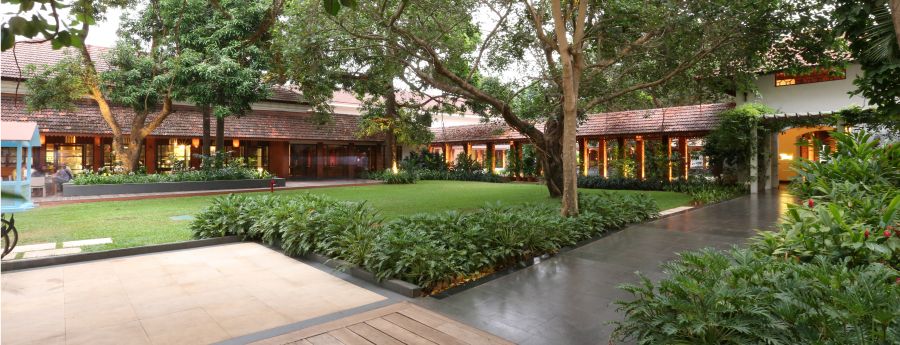
Amaraanth melds local Goa charm with top-tier amenities, lovingly repurposed from a family home. The project emphasizes minimizing the built-up footprint, with the core structure remaining largely unchanged. Thoughtful modifications foster openness, creating a dynamic environment transitioning between dining, resting, and leisure areas. The suites showcase a fusion of tropical modern design and vintage accents, some offering outdoor bathtubs and private yards.
SAPTHA RESORT & SPA | Wayanad, Kerala
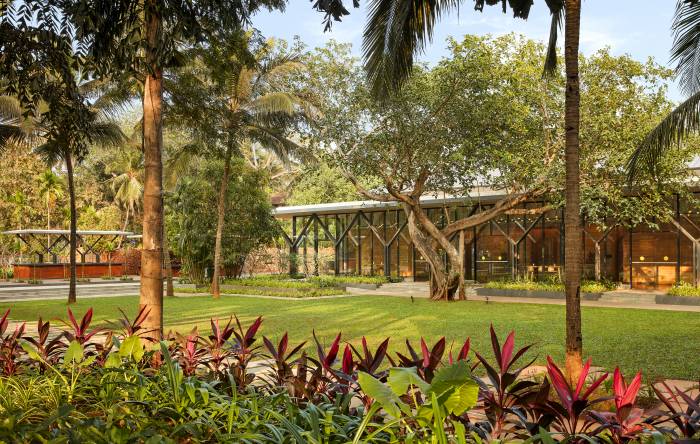
Conceptualized to integrate with its natural surroundings, this space employs vernacular materials and open courtyards to connect with the landscape. The use of bamboo, arecanut palm, and local stone reflects regional craftsmanship. The resort's strategic layout maximizes stunning views and gentle breezes, while informal landscaping featuring native flora adds to the tranquil atmosphere.
MALABAR HEADQUARTERS | Kozhikode
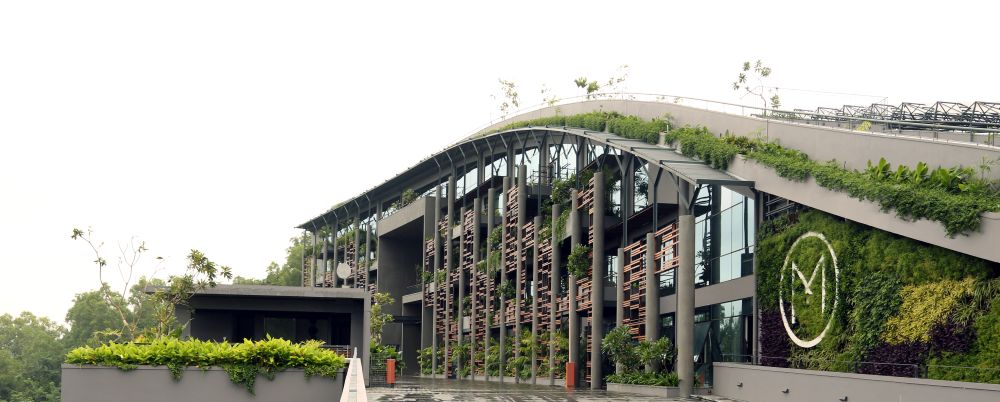
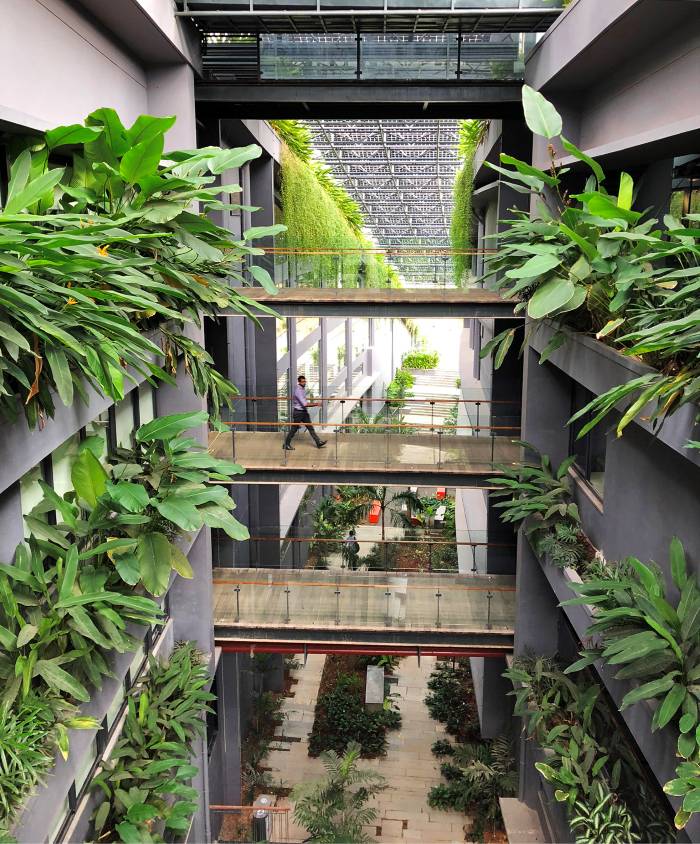
This project showcases innovative design solutions for large corporate offices. A green buffer system shields the building from the western sun, while the sloping form and terrace landscapes reduce south-side heat gain. A central courtyard with solar screens optimizes airflow and passive cooling. The presence of greenery at every level fosters a strong biophilic connection, making it a prime example of sustainable architecture on a corporate scale.