Travel: Hyderabad
In the late 16th century, a visionary leader from the Qutub Shahi dynasty stood on the banks of the Musi River, envisioning a future city that would become Hyderabad.
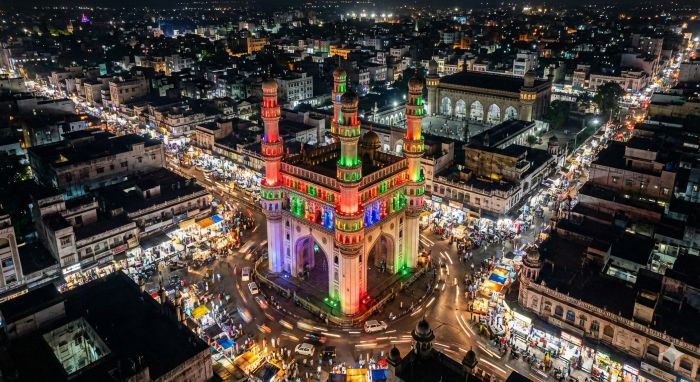
Under his reign, artisans were summoned to craft architectural marvels that celebrated the city's growing grandeur. This rich background, marked by creative patronage, still resonates through the architecture, etiquette, and cultural sophistication that define Hyderabad's character today.
The city reveals itself slowly, through detail rather than declaration. Strolling down Laad Bazaar, you catch the rhythmic clang of a metalworker at his craft, the chime of glass bangles resonating in the air. A vendor, face creased with stories of old, offers a knowing smile as she wraps the vibrant silks for your purchase. Nearby, two old friends exchange laughter over a meal, their conversation mixing with the aroma of freshly ground spices. In Hyderabad, history does not sit behind velvet ropes, but flows through streets, kitchens, and conversations with remarkable continuity.
The Old City: A Living Archive
The old city unfolds as a living archive. Around Charminar, the city’s most recognisable landmark, everyday life unfolds amid centuries-old structures. Markets brim with bangles, bidriware, textiles, and pearls, commodities that once travelled royal trade routes and continue to sustain artisanal economies.
Narrow lanes lead to bazaars alive with texture and sound, metalwork catching light, textiles absorbing colour, fragrances of spice and attar drifting through the air. A short distance away, the Qutub Shahi Tombs rise in measured symmetry, their domes and terraces offering both architectural gravitas and rare quietude, a reminder of Hyderabad’s deep engagement with art, design, and memory. Craft traditions continue not as curated heritage, but as necessity and pride, sustained by generations of skilled hands.
Culinary Rituals and Regional Exchange
Cuisine is inseparable from the city’s cultural fabric. Hyderabadi kitchens reflect courtly origins and regional exchange, favouring slow cooking, layered spice, and balance over heat. Biryani here is not simply a dish but a ritual, defined by fragrance, texture, and technique. Haleem, rich and restorative, speaks of long hours and communal kitchens, while Irani cafés preserve a gentler rhythm of life, where conversation lingers over tea and baked bread.
Global Ambition and Cultural Composure
Beyond its historic quarters, Hyderabad has emerged as one of India’s most dynamic urban tech centres. Its contemporary districts reflect global ambition, yet the city resists anonymity. Public art, performance spaces, and cultural festivals ensure that tradition remains visible, evolving rather than receding. Classical music, literature, and craft continue to hold social currency alongside innovation and enterprise.
What sets Hyderabad apart is its composure. It carries its past without nostalgia and embraces progress without haste. The result is a city of rare balance, cultivated rather than curated, where heritage and modern life exist not in contrast, but in seamless dialogue. Courtesy, multilingualism, and a distinctive sense of humour shape social life, reinforcing Hyderabad’s reputation for warmth beneath its formality.